

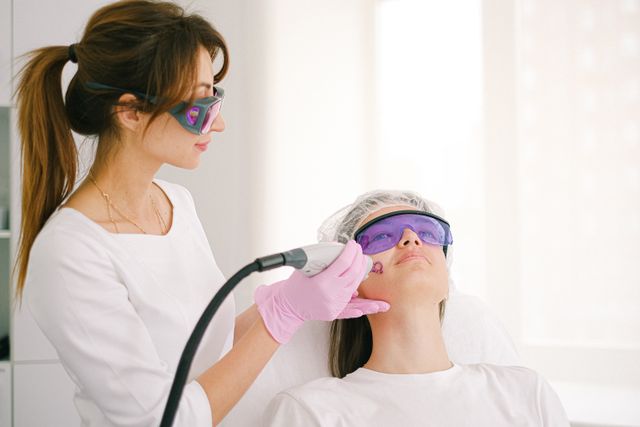
The visible lines and wrinkles are the end result of a process that begins long before they show up in the mirror. As collagen and elastin fibres break down over decades, the structural support that keeps skin firm and smooth breaks down, leading to fine lines and wrinkles. Studies show that collagen production declines at a rate of 1% per year after age 20. Chronic sun exposure also speeds up collagen loss by activating enzymes that break down collagen more quickly than normal ageing alone does. By the time wrinkles are visible, the structural deficit has been accumulating for years.
Why Is the Dermis the Target, Not the Surface?
To understand what laser therapy treats, it is necessary to look below the skin surface. Fine lines appear due to repeated facial expressions and a decrease in moisture retention, while deeper wrinkles result from structural weakening of the collagen and elastin networks in the dermis. Published studies in dermatological journals have demonstrated that photoaged skin can contain less collagen than protected skin areas on the same individual. That difference, seen in the same body, divided only by sun exposure history, accounts for why topical moisturisers address surface symptoms while laser therapy addresses structural loss.
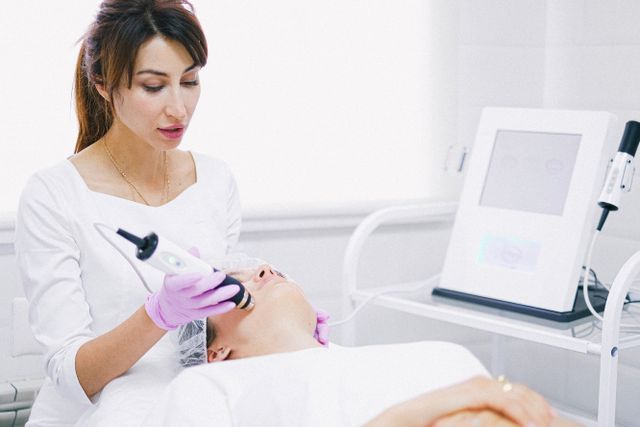
Laser therapy delivers precise thermal energy to target skin layers, creating tiny treatment zones. These stimulate the body to respond with a natural wound-healing process. When fibroblast cells react to that controlled injury, they produce new collagen and elastin fibres. Fractional laser systems only treat a fraction of the skin surface at one time, allowing surrounding tissue to remain intact to support healing. This is why patients at laser clinics Sydney and throughout Australia opt for fractional and non-ablative technologies.
What Do the Clinical Numbers Actually Show?
The research supporting laser therapy for reducing wrinkles is not vague but specific. A prospective clinical study of patients with moderate to severe photoageing demonstrated average improvements of 48.5% in skin texture, 50.3% in skin laxity, and 52.4% in overall cosmetic appearance following fractional CO₂ laser therapy. Not subjectively based on what patients thought they were getting for their money, but objective measurements based on the scale of change. Always above 48% across three separate measures, indicating actual structural change in the dermis.
This picture is furthered by long-term follow-up data, with some patients in longitudinal studies showing significant improvements even five years after treatment. This durability is important because most aesthetic treatments need to be maintained to retain results. Laser therapy resets the baseline from which that degradation continues. This is a very different relationship with time than what can be achieved with a topical product.
Where Do Individual Factors Determine the Final Outcome?
The improvement delivered by laser therapy depends on a number of factors, including age, skin type, the extent of photoageing, smoking history, and post-treatment care. Combination approaches, such as laser in combination with other interventions, may be necessary for patients with advanced skin laxity. Here, the structural deficit has progressed far beyond what can be fully restored by collagen remodelling. Smoking inhibits healing and negates some of the collagen-stimulating benefits the procedure is designed to generate. These are not edge cases. They are common variables that greatly affect where within the clinical improvement range a given patient will land.
The one thing that consistently determines whether results last is sun protection after treatment, as UV exposure breaks down the new collagen stimulated by the laser. This means patients who go back to unprotected sun exposure are essentially undoing the biological process they paid for. Australian dermatologists routinely include broad-spectrum sunscreen as a non-negotiable post-treatment requirement. This is not a matter of general skin health advice, but to ensure that the results of laser therapy are maintained. The treatment sets the stage for progress. The months that follow determine how long that stage remains.