


Flowers that are delivered to a hospital patient are surprisingly quick to expire. There were 12.8 million admissions into hospitals in Australia in 2024-25, with the average length of stay standing at only 2.7 days, according to official national hospital data. Flowers can reach a vacant bed from Monday through Tuesday or be stopped in front of a ward entrance of which the sender never had any inkling. It all depends on a few inquiries quietly made behind the scenes.
The Clock Starts Ticking Upon Admission
Today, most patients leave the hospital within a couple of days, and some even experience a day procedure during which they spend less than one day at the hospital. Arranging get well soon flowers delivery to Melbourne hospitals quickly seems a thoughtful gesture, yet time alone does not solve the problem. Sending a quick message to a relative and asking them whether the patient is still in the hospital and will stay there will save the flowers from being left at the reception or delivered back to the florist. In case the patient is due for a discharge soon, delivering flowers to their residence can be a more appropriate idea. Since visitors tend to cease coming after discharge, while the patient needs to continue recovering for another couple of weeks, flowers delivered to the kitchen table will come exactly when the attention of relatives will start waning.
There Are Some Wards That Close Themselves Off To Flowers
The policy on flowers in each hospital differs, and the policies can be determined ward by ward. For instance, the Royal Melbourne Hospital in Parkville requests from its visitors not to deliver any flowers or potted plants to its emergency department, intensive care unit, haematology wards, cancer wards, respiratory wards and transplant wards. This is done because many patients there have weak immune systems and thus can be susceptible to any infections. Each hospital in Melbourne keeps its own list. And a ward that accepted flowers last year can already change its policy this year. A simple phone call to the front desk of a ward can settle the issue within minutes, and it should be done prior to arranging the flowers.
Scent Travels Further In A Shared Hospital Room
A hospital room can hold four beds and every patient breathes the same air. Back in the Victorian era, health advice warned against strong scents, and that includes perfumes and air fresheners which can trigger asthma. Even a strongly perfumed bouquet of flowers your partner loves can still bother the neighbour in the next bed. Florists usually advise against delivering strongly scented, pollen-heavy blooms like some types of lily, which can be a real problem in a hospital setting. Instead, go for lightly scented roses, some Australian native flowers and seasonal blooms; they’re gentler on everyone in the shared space. The type of flowers isn’t the only thing to consider, though; sturdier stems tend to do better in the warm, dry air of a hospital ward, which can be a challenge for more delicate blooms.
A Vase Saves A Nurse A Lot Of Hassle
It’s not exactly easy to find a spare vase on a busy ward, and when a bunch of flowers turns up wrapped in paper, staff are left scrambling for a jug to put them in. Delivering an arrangement in its own vase or even just in a box can solve that problem straight away. And don’t forget to think about the size of the arrangement too; bedside lockers tend to get cluttered with all sorts of stuff like water jugs, tissues and phones, so a compact posy is usually a better fit than a big, elaborate display.
Getting The Flowers To The Right Bed Is Crucial
A big hospital can feel like a maze, and the courier is going to be relying on the info you provide. Every order should include:
- The patient’s full name, just like it’s recorded in the hospital.
- The name of the ward and room or bed number if you know it.
- The sender’s mobile number so the florist can get in touch if the patient gets transferred to a different ward.
Unlike what you might think, hospital patients get transferred between wards more often than people realise, sometimes within hours of being admitted. A contact number gives the florist a chance to redirect a delivery instead of sending it back to you. Card messages are best kept short and sweet; something like “thinking of you, rest up” is easy on the eyes for someone who’s feeling tired, sore or maybe even a bit medicated.
Family And Staff At The Bedside Matter Just As Much
Partners, parents and adult children often spend long hours at the bedside, working around the shifts of the nursing team. Where the hospital allows it, a small arrangement or a card for the family or the care team is a lovely gesture that requires nothing in return. Some wards actually prefer cards or wrapped treats over flowers, so the same phone call can cover both of those questions. And if flowers are completely off the table, then a handwritten note is a nice way to keep the sentiment intact and doesn’t take up any locker space.
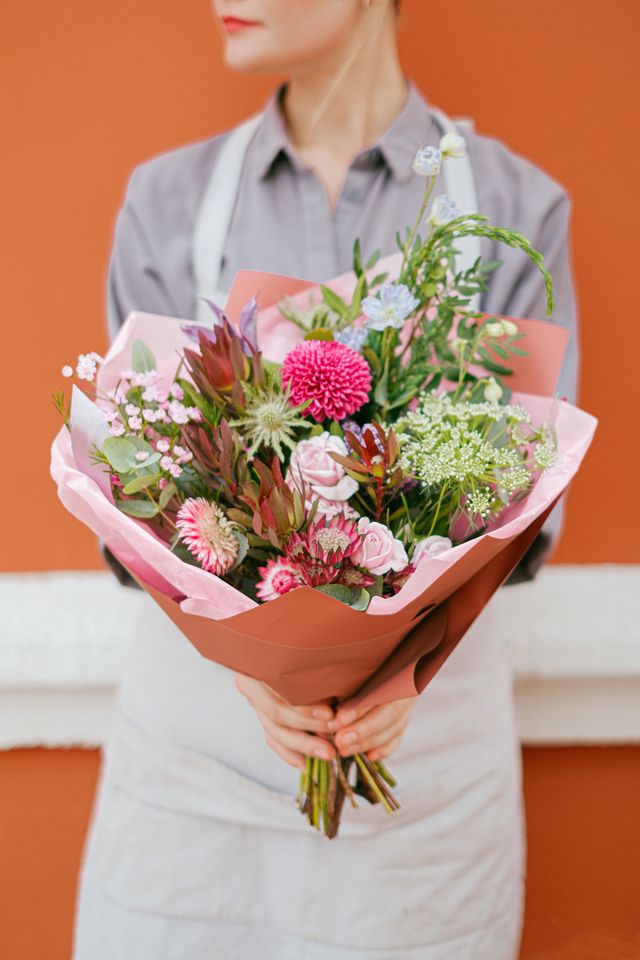
The Best Time To Send Flowers May Be After Discharge
Hospital stays are short, but recovery can drag on. A second delivery a week or so after someone gets home can be far more meaningful than the first, arriving once all the get well messages have slowed down and the long, quiet days begin.