

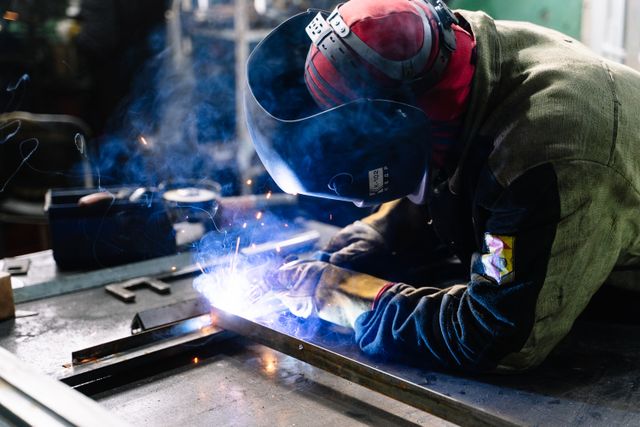
A stainless steel weld can look absolutely fine the moment it’s finished, but it can still fail its corrosion resistance tests in just a few short weeks. Visual inspections will tell you that the surface looks clean; but that just doesn’t tell you whether that all-important chromium oxide passive layer has been properly restored. And that is the distinction at the heart of one of the most poorly understood quality issues we face in Aussie fabrication.
What Corrosion Resistance in Stainless Steel Actually Depends On?
The reason stainless steel doesn’t corrode is because of a thin layer of chromium oxide on the surface. And that layer forms all on its own in air that’s got plenty of oxygen. Plus, it’s self-repairing under normal circumstances. But welding’s a different story altogether, the extreme heat involved can strip chromium away from the alloy’s surface layer, and what you see is what some people call heat tint; that discolouration that starts where the weld bead is and then spreads out in a kind of gradient from yellowish through to blue and then dark grey-black. For detailed technical guidance on electrochemical passivation methods, tigbrush.com covers the full process.
The colour tends to get darker the further into the metal the chromium depletion is. So you might see areas right next to the heat tint that look fine but still have chromium depletion hidden inside. And no amount of cleaning will ever pick that up with a visual inspection. What you need to do is address the real problem, not just the symptom. And that’s what passion is all about.
Why Is Atmospheric Re-Passivation Not a Reliable Strategy?
Stainless steel will passivate itself over time if it’s left out in clean air that’s got plenty of oxygen. Some fabrication shops rely on this, just leaving their welds out to air after cleaning them up. But the trouble is that how long it takes is a bit of a lottery; it can vary wildly from one type of stainless to the next and what’s more, it can get fouled up at any moment by dirt, grime or even chloride exposure during that waiting period.
Coastal areas of Australia are especially tricky; the air’s got a lot of salt in it, which accelerates corrosion big time. So if you just leave welded surfaces unpassivated and wait for nature to do its thing, the window between when it was done and when the corrosion starts is gonna be vanishingly small. And that’s not a conservative approach; that’s just a quality risk waiting to happen, and it usually does, in the form of warranty claims and callbacks rather than some clear-cut failure at the time of inspection.
What the Testing Evidence Shows?
Scanning electron microscope testing by independent laboratories has demonstrated that electrochemical weld cleaning removes any trace of oxide from the weld zone, and restores chromium content on the surface to be higher than the original pre-weld stainless steel content. Not only is the passive layer restored but it is achieved through higher chromium content compared to the baseline level of the parent material.
Corrosion testing undertaken by The Welding Institute has shown corrosion rate values in welds cleaned through this method to be lower than the corrosion rate of the unwelded parent material. In Australia, fabricators working to ASTM and Australian standards on corrosion resistance of materials for food contact, pharmaceutical or marine application can rely on such third-party validation, not on the manufacturer’s claims alone.
Australian Fabricators Making Mistakes With Electrochemical Cleaning
Use of an incorrect electrolyte for a specific grade of stainless steel is probably the most frequent source of problems with achieving consistent results. Both grades 304 and 316 stainless steel have a different composition of chromium and nickel content and react in a different manner to the same cleaning chemistry under similar conditions. An electrolyte optimised for one grade will either under-clean or over-clean the other.
Omitting the neutralisation step results in a different kind of problem. As long as the active cleaning fluid is left on the surface after the actual cleaning is finished, it will continue the electrochemical reaction even after cleaning is visibly completed. When no neutralising rinse is applied properly, there will be white crystalline residues left by the fluid as it dries, and it will continue etching in microscopic crevices due to pooling. The neutralising solution stops the reaction and stabilises the surface and is not an optional step in the procedure.
Pickling paste alternative works similarly in terms of removing visible oxides, but does not create the same passive layer as electrochemical cleaning. The surface will look clean while the chromium content in the heat-affected zone will remain below the threshold for reliable corrosion resistance in demanding environments.
When Passivation Specification Is a Compliance Requirement?
Safe Work Australia Code of Practice on welding processes regulates the safety of workers during the welding operations but does not set surface treatment standards. Passivation requirements come from client specifications and industry standards. Specific compliance requirements include:
- HACCP-certified Australian food manufacturers require passivation procedure documentation for stainless steel food contact equipment.
- The TGA-regulated pharmaceutical manufacturing industry requires passivation documentation as a part of equipment qualification.
- The clients in the mining and resources sector who are specifying stainless steel in corrosive and marine environments evaluate passivation as a quality indicator for future maintenance cycle length.