
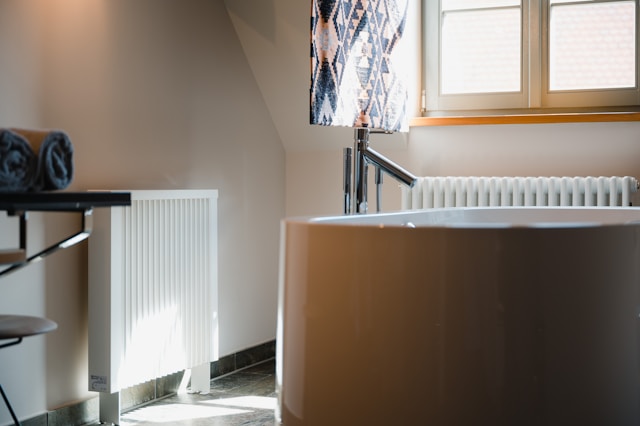
This trend is present in all renovated bathrooms, regardless of the budget being used: huge expense is put into vanities, tiles, and tapware, and then the heating system is added in almost as an afterthought. Even if the photograph-perfect bathroom costing $30,000 to install is an uncomfortable room in the cold 7 o’clock morning of Melbourne winter when the heating system is insufficient and the towels have not dried from yesterday. This is where the difference between renovation budget and heating budget makes people uncomfortable.
ABS Building Activity figures demonstrate that the amount of money spent on renovation in Australia in the September 2025 quarter alone amounted to $3.7 billion, and the heaters and heating equipment are becoming increasingly popular due to changes in homeowners’ perception of the bathroom function. Modern products are much more capable, efficient, and numerous than many guides would suggest.
The Difference Between a Heater and a Heated Towel Rail
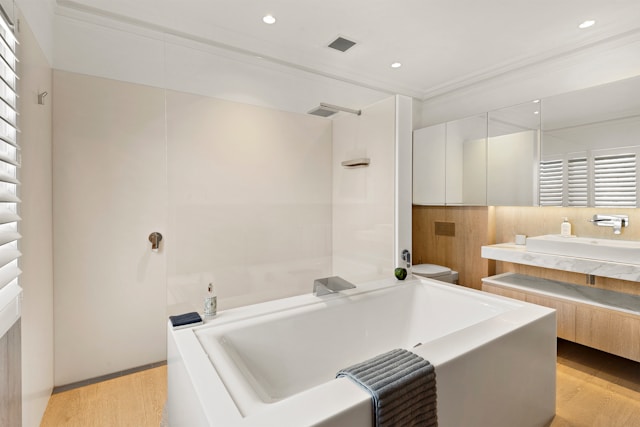
While some people use these terms like they’re interchangeable – they really aren’t. A heater is just that it warms up the air in your room. But a heated towel rail is a bit more clever it not only dries your towels but can also reduce the moisture levels in the air. Plus, the higher wattage ones can even add a bit of warmth to a small space. But don’t get me wrong here they don’t replace each other completely.
If you’ve got one of those exhaust fan bathroom heaters that most Aussie bathrooms have, it’s only going to provide a very limited amount of heat. The fan will just blow the warm air around and that’s it won’t actually keep the room warm for long. On the other hand, wall-mounted panel heaters are a bit better they heat up a lot faster and reach higher air temperatures, but they don’t do a thing for drying your towels.
Now, here’s where it gets interesting. A heated towel rail at 150W or above can do both heat the room and dry the towels. They’re especially useful in smaller bathrooms where you can position them to get the best of both worlds.
- To be honest, exhaust fan heater combos are only really effective in tiny bathrooms with no draughts, but they just don’t cut it in bigger spaces.
- If you’ve got a wall-mounted panel heater on a timer, it’ll heat up the room faster than anything else but you’ll still need to get a separate way of drying your towels.
- Heated towel rails that are rated at 150W or higher will give you a decent amount of heat in environments up to 6-8 square metres that’s assuming you’ve got decent insulation.
Electric vs Hydronic Heated Towel Rails
Let’s be real, most Aussie homes don’t have hydronic central heating in the bathrooms, so electric rails are what you’ll find on most jobs. But hydronic systems – if you can find them are mainly in older Victorian homes or places that were specifically designed for that type of heating.
Now, within the electric rail category, you’ve got your dry element and your oil-filled variants. Dry element rails start up quickly from cold, they’re lighter and really respond well to timers. But oil-filled ones take a bit longer to warm up but they retain the heat for ages after they’ve been turned off which is great if you’re using the bathroom a few times in the morning.
- The dry-element electric rails are the most common go-to for new bathroom installs in Aussie renovations they’re quick, responsive to timers and all that.
- Oil-filled ones are a better fit if you’ve got a family bathroom with lots of kids using it across the morning they just keep on giving you heat.
- Hydronic rails that are connected to an existing system share the running costs of the whole heating system but you’ll need a plumber to install them and they won’t function on their own.
Sizing a Heated Towel Rail the Right Way
You can’t judge the effectiveness of a heated towel rail just by its size. A massive 900mm rail with big space between its bars might actually put out the same amount of heat as a smaller 600mm rail with closer together elements. It’s a common mistake to pick a rail just because it looks nice in the space, without checking the wattage and that can leave you with a product that’s all style and no substance.
When it comes to sizing a heated towel rail for your bathroom, there’s a general rule of thumb: you need about 40 to 60 watts per cubic metre to keep the room feeling nice and toasty. But that number actually depends on how well-insulated your space is, how big the windows are and what kind of flooring you have. Let’s say you’ve got an ensuite that’s 2.4m x 2.1m x 2.4m that’s around 12 cubic metres, which means you’ll need around 480 to 720 watts for the whole space to be warm and a 100-watt towel rail is only going to contribute to that, it’s not going to replace your main heating.
- Bar spacing and bar count both have an effect on drying performance. The more bars you’ve got, spaced close together, the faster they’ll dry your towels, but that also means you’ll need higher wattage to make sure they put out the same level of heat overall.
- Room height matters here too, because warm air rises. If your ceiling is 2.7m high, you’ll need a bit more power to keep the temperature the same as if your ceiling was, say, 2.4m high.
- In big family bathrooms, you’ve got to think of a heated towel rail as a bit of a drying appliance that also throws off some heat, rather than the main heating source.
Getting a Heated Towel Rail Up and Running in Australia
If you’re buying a heated towel rail to put in a wet area in Australia, make sure it’s got a minimum IP55 rating. That means it can handle a jet of water coming from any direction. That’s the minimum requirement for Zone 2 and Zone 3-bathroom spots, but Zone 1 which is in or over the bath or shower needs something with a higher rating. That’s not always practical, though.
You can fit plug-in rails yourself if you’re putting them in an area where they’re safe to do so. Hardwired rails, on the other hand, have got to be fitted by a licensed electrician it doesn’t matter what state you’re in.
- Zone 2 in a bathroom is anywhere within 600mm of a shower or bath edge and up to 2.25m off the ground and any product you put in there needs to have an IP rating that matches the zone.
- With multi-flex wiring, you can adjust where the cable goes into the wall at the time of installation, depending on what you want to do with the cables afterwards which is worth thinking about when the final rail position gets decided after the tiling is done.
- Anything with an IP44 rating is not suitable for bathroom installation near water you need to go for at least IP55, and IP65 is even better if you’ve got an area that gets sprayed directly.
Running Costs – Don’t Let That Be Your Reason to Pass on Bathroom Heating
When people say heating the bathroom will hike up the power bill the first thing to take a close look at is whether that’s actually true. Let’s do some rough maths. If you’ve got a 100W rail and you have it on for 3 hours a day, that’s going to be around 0.3kWh every day. Aussie electricity prices average out at 30-35 cents per kWh, so that’s around 9-10 cents a day or around $33-$37 a year. Jump to a 200W and you’re talking about $65-$75 per year.
But here’s the thing with a timer switch or programmable controller (they’re the same thing really) you can basically eliminate that extra electricity cost. Set the rail to come on 30 minutes before the household uses the bathroom and switch off 30 minutes after, and you’re only using energy when it’s actually needed. It’s the people who leave their bathroom heaters on all the time who are going to rack up the big bills not the heaters themselves.
- You can get a smart plug timer that’ll work with most plug-in rails for under $30 and it’ll pay for itself in saved power costs in no time.
- Now, here’s the thing if you compare the cost of a heated towel rail to the cost of tossing towels in the wash because they’re all damp and stinky between uses often the maths changes in favour of the rail. Damp towels need washing more often, which is a power hog in its own right.
- And if you’re one of those large family households with two towel rails in the big bathroom, just make sure you assess the total power draw and co-ordinate your timers so you’re not running both at once when one would do the job.